
The Subtle Energy of Yoga: How Prana Powers Your Inner Transformation

Have you ever stepped off your yoga mat feeling inexplicably lighter—not just physically stretched, but alive with a quiet, buzzing vitality? Like an invisible current has washed away the mental fog, softened the edges of daily chaos, and left you clearer, calmer, more present.
That exact feeling pulled me back to the mat during one of my worst burnout periods. Caffeine wasn’t helping. Deadlines felt suffocating. I wasn’t after impressive poses or Instagram-worthy flows; I was desperate for that subtle hum of energy the ancient yogis call prana—the vital life force that animates everything. Once I started paying attention to it, everything shifted: my stress responses, my emotional resilience, even how I showed up for the people I care about.
Prana isn’t mystical woo-woo. It’s the subtle energy that flows through every breath, every movement, and every pause in your practice. Ancient texts like the Hatha Yoga Pradipika describe it traveling along invisible channels called nadis, linking your physical body to your mind and spirit. When tension, poor posture, shallow breathing, or chronic stress block those channels, you feel stuck—drained, anxious, reactive. When you free it up through intentional yoga, you unlock a deeper resilience: sharper focus, steadier emotions, and a genuine sense of aliveness.
My Wake-Up Call: A Simple Breath That Changed Everything

The first time I truly felt prana wasn’t in a challenging asana. It was during Nadi Sodhana (alternate nostril breathing, also called Anulom Vilom). Sitting quietly, I alternated nostrils slowly, and after a few minutes, a gentle warmth spread from my core outward. Nothing flashy—just this soft, expansive sensation. Afterward, a nagging work worry that had looped in my head for days simply dissolved. I felt steady, not reactive.
Over months of consistent practice, that steadiness grew. Arguments that once triggered me became moments I could meet with calm curiosity. Sleep improved. Creativity flowed easier. It wasn’t magic; it was proof that yoga’s deepest power often lies in this subtle energy work, not the visible shapes.
What Science Says About Prana and Breath
Modern research is validating what yogis have known for centuries: practices that enhance prana—like pranayama (breath control) and mindful movement—directly influence your nervous system, stress response, and emotional well-being.
• Breath control reduces anxiety and improves emotional regulation. A randomized controlled trial on Bhastrika pranayama (bellows breath) showed it significantly decreased state anxiety and negative affect while modulating brain regions involved in emotion processing, such as the amygdala and prefrontal cortex. Participants also experienced better heart rate variability (HRV), a marker of autonomic balance and stress resilience.
• Yoga boosts HRV and cuts stress reactivity. Multiple reviews and meta-analyses confirm that yoga practices increase vagal tone (parasympathetic dominance), improve HRV, and lower perceived stress. For example, slow pranayama techniques enhance parasympathetic activity, reduce cortisol-like responses, and promote emotional stability—even in high-stress groups like students or frontline workers.
• Alternate nostril breathing balances the system. Studies on Nadi Sodhana show it can shift autonomic balance toward relaxation, lower perceived stress, and support cardiovascular health by influencing sympathovagal tone.
These aren’t vague claims; they’re backed by randomized trials measuring brain activity, HRV, cortisol proxies, and self-reported anxiety/depression scales. The subtle shifts in energy translate to measurable changes in how your body handles stress.
How to Start Tapping Into Prana Today

You don’t need hours on the mat or advanced techniques. Start small and build awareness—the real transformation happens in consistent, gentle attention.
1. Treat your breath as energy. In your next session (or even at your desk), inhale deeply and visualize prana entering like warm sunlight, filling every cell. Exhale and imagine releasing tension or stagnation.
2. Breathe into blockages. Hold a pose like Pigeon or Child’s Pose and notice where energy feels stuck—tight hips from sitting all day? Shallow chest from stress? Direct your breath there softly. No forcing; just curious awareness.
3. Try 5 minutes of Nadi Sodhana daily. Sit comfortably. Use your right hand: thumb on right nostril, ring finger on left. Close right, inhale left. Close left, exhale right. Inhale right, exhale left. Repeat 5–10 cycles. Notice the subtle warmth or clarity afterward.
These micro-practices compound. What starts as a faint sensation becomes a reliable inner resource.
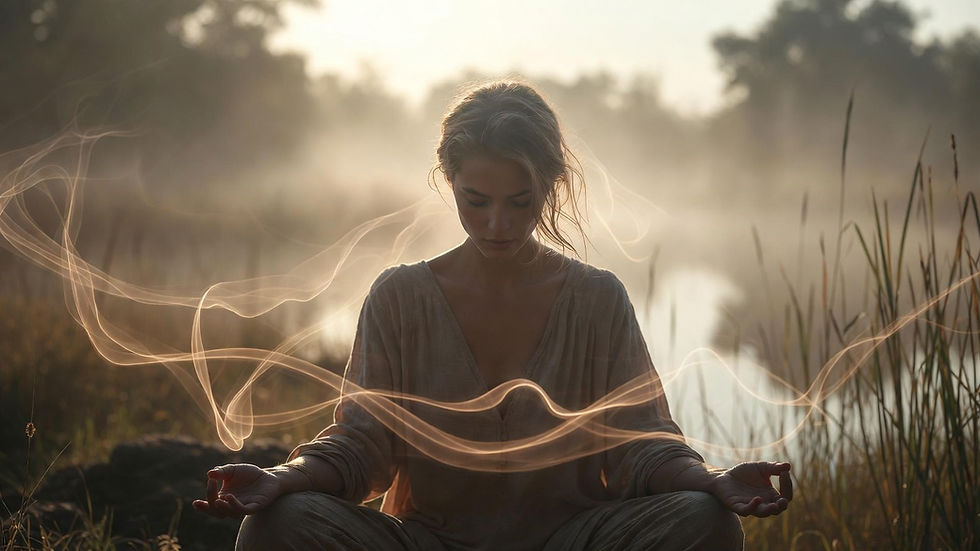
Prana isn’t a one-time fix—it’s a lifelong companion for inner freedom, helping you navigate life’s inevitable turbulence with more grace and less reactivity.
If this resonates and you’re ready to go deeper—maybe with guided pranayama prompts, weekly energy-focused sequences, or reflections tailored to your practice—subscribe below for fresh insights delivered straight to your inbox. Or if you’re reading this from Instagram, drop “DEEPER” in the comments, and I’ll send you a personalized reflection to spark your next session.
Let’s keep flowing with it. 🖤
What’s one moment when you felt that subtle energy shift during yoga? Share below—I’d love to hear. 👇
Comments